🚚 Free Worldwide Shipping on All Orders!Shop Now

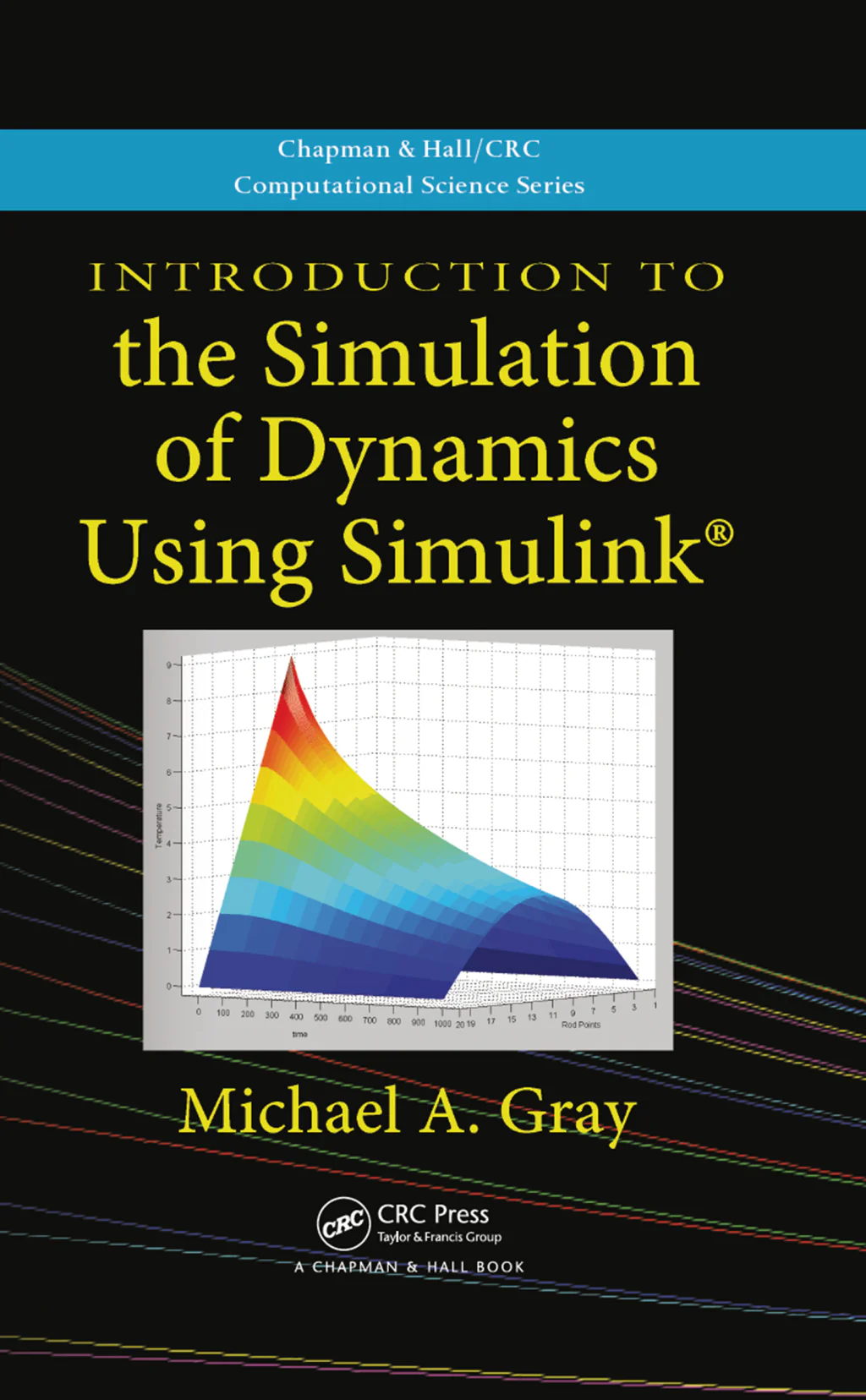
Introduction to the Simulation of Dynamics Using Simulink
Designed for undergraduate students in the general science, engineering, and mathematics community, Introduction to the Simulation of Dynamics Using Simulink (R) shows how to use the powerful tool of Simulink to investigate and form intuitions about the behavior of dynamical systems. Requiring no prior programming experience, it clearly explains how to transition from physical models described by mathematical equations directly to executable Simulink simulations. Teaches students how to model and explore the dynamics of systems Step by step, the author presents the basics of building a simulation in Simulink. He begins with finite difference equations and simple discrete models, such as annual population models, to introduce the concept of state. The text then covers ordinary differential equations, numerical integration algorithms, and time-step simulation. The final chapter offers overviews of some advanced topics, including the simulation of chaotic dynamics and partial differential equations. A one-semester undergraduate course on simulation Written in an informal, accessible style, this guide includes many diagrams and graphics as well as exercises embedded within the text. It also draws on numerous examples from the science, engineering, and technology fields. The book deepens students' understanding of simulated systems and prepares them for advanced and specialized studies in simulation.
Select Duration
From $61.05
Introduction to the Simulation of Dynamics Using Simulink—
$61.05
Product Information
Product Information
Shipping & Returns
Shipping & Returns
Description
Designed for undergraduate students in the general science, engineering, and mathematics community, Introduction to the Simulation of Dynamics Using Simulink (R) shows how to use the powerful tool of Simulink to investigate and form intuitions about the behavior of dynamical systems. Requiring no prior programming experience, it clearly explains how to transition from physical models described by mathematical equations directly to executable Simulink simulations. Teaches students how to model and explore the dynamics of systems Step by step, the author presents the basics of building a simulation in Simulink. He begins with finite difference equations and simple discrete models, such as annual population models, to introduce the concept of state. The text then covers ordinary differential equations, numerical integration algorithms, and time-step simulation. The final chapter offers overviews of some advanced topics, including the simulation of chaotic dynamics and partial differential equations. A one-semester undergraduate course on simulation Written in an informal, accessible style, this guide includes many diagrams and graphics as well as exercises embedded within the text. It also draws on numerous examples from the science, engineering, and technology fields. The book deepens students' understanding of simulated systems and prepares them for advanced and specialized studies in simulation.